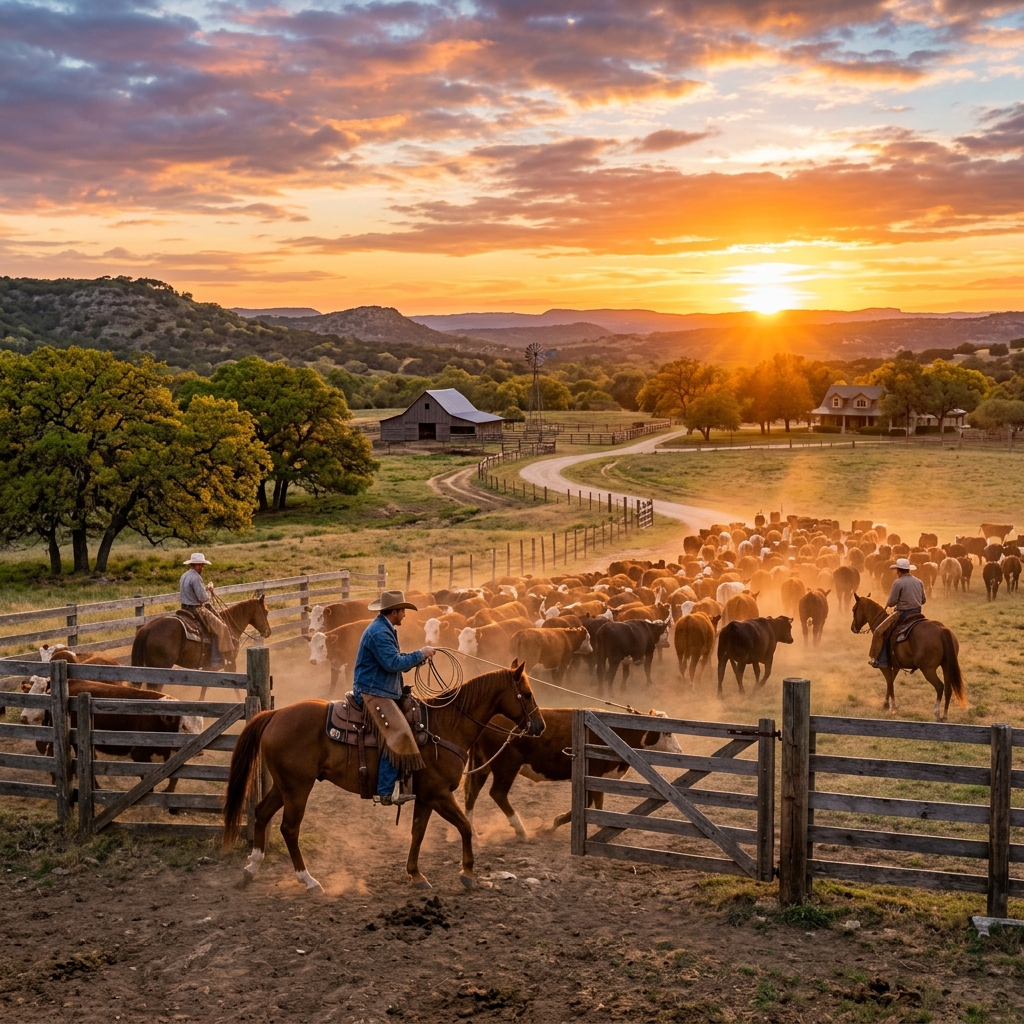
Ranch jobs in Texas can involve cattle care, horseback work, equipment, property maintenance, or guests. Start with the kind of operation you want to work on, then compare the pay, schedule, and housing in each opening. The same "ranch hand" title can describe very different work.
Texas had 12.1 million cattle and calves on January 1, 2026, the largest state inventory in USDA's report. That establishes the scale of its cattle industry; it does not tell us how many ranch jobs are currently open. USDA January 2026 Cattle report, page 5.
What ranch jobs in Texas pay
For a published starting point, O*NET reports a 2025 Texas median of $16.31 an hour, or $33,920 annualized, for farmworkers working with farm, ranch, and aquacultural animals. Its middle half of wages falls between $13.54 and $20.74 an hour. Texas wage table.
These figures cover a broader occupation than ranch hands. The underlying OEWS survey excludes the animal production industry, so the table misses many workers hired directly by cattle ranches. It also does not value housing or distinguish a first-season hand from an experienced cowboy. Use it as background, not as the going rate for a specific Texas opening. BLS coverage and wage definitions.
Before comparing two offers, ask:
- Is the pay hourly, monthly, annual, or for a fixed season?
- What are the normal hours and the peak-season schedule?
- Is housing included, charged separately, or unavailable?
- Does the job involve managing people, budgets, or an entire property?
- Which duties must you already know, and which will the employer teach?
A foreman role should be compared with jobs carrying similar responsibility. Adding a manager's salary to an entry-level pay range obscures the difference. Our ranch hand salary guide provides state benchmarks and worked examples for comparing hours and housing.
If an opening is offered through H-2A, check its job order and current Department of Labor wage information. H-2A rates should not be presented as the general starting wage for every Texas ranch job.
Narrow your search by region and operation
A regional search helps, but read the duties before deciding an opening fits. A feedyard pen-riding job and a machinery job can be in the same county while requiring different experience.
West Texas and the Trans-Pecos
For remote cattle properties, investigate the practical details of living and working far from town. Ask how cattle checks and gathers are done, how much riding is required, and whether the job includes maintaining fences, wells, or water lines.
Get the actual worksite location and driving time to groceries and medical care. Confirm phone coverage, internet, housing, and whether travel between pastures uses an employer vehicle. Do not assume a remote posting includes a private house or that all livestock work happens on horseback.
Texas Hill Country
When considering a Hill Country property, establish whether the business is cattle production, guest accommodation, hunting, private estate management, or a combination. The word "ranch" alone does not answer that question.
A useful interview question is: "How would my time be divided between livestock, property maintenance, and guests?" Follow up on fencing, brush work, equipment, weekend duties, and who sets the daily priorities.
Panhandle and High Plains
Separate feedyard roles from general farm and ranch work. If you want to ride, look closely at pen-rider duties. If your strengths are machinery and maintenance, examine equipment, feeding, and irrigation responsibilities.
Ask what a normal shift includes and which machines or vehicles you would operate. Confirm the exact driving qualifications required rather than assuming every agricultural driving job needs the same license.
South Texas and the Coastal Plains
For properties combining livestock, wildlife, or hunting, ask which enterprise drives the job. Seasonal guest duties may change a maintenance or livestock role considerably.
Clarify the outdoor schedule, water-system responsibilities, brush and fence work, guest contact, and housing. Ask the employer how work is organized during hot weather and who supervises unfamiliar tasks.
These are starting questions, not an exhaustive map of Texas ranching. Include East Texas or other areas when their actual openings fit your experience and living needs.
When to apply for Texas ranch work
There is no single statewide hiring calendar. Calving, forage conditions, hay work, guest bookings, and employee departures can all affect an opening's timing.
Texas A&M AgriLife's guidance on breeding and calving dates explains why the production calendar depends on the operation and conditions. A spring-calving schedule should not be assumed for every Texas herd.
Use the work calendar to ask better questions:
| Work mentioned in the opening | What to confirm |
|---|---|
| Calving | The herd's actual calving months, supervision, and overnight checks |
| Hay or irrigation | Expected season, equipment experience, and weather-related schedule changes |
| Weaning, gathering, or shipping | Dates, crew size, and handling experience required |
| Hunting or guest work | Booking season, weekend duties, and customer responsibilities |
| Year-round maintenance | Regular schedule, emergency callouts, and relief coverage |
Apply according to the posted start date. If you need training, establish whether the ranch can provide it before its busiest period.
Make your application specific to the opening
A concise résumé should make your experience easy to assess. Include the equipment you have operated, livestock tasks you have done, dates of relevant work, availability, and references who have agreed to be contacted.
Describe what you can do independently. "Helped repair barbed-wire fence under supervision" is more useful than "experienced in all ranch duties" when you are applying for a first job. For an experienced role, explain the herd, equipment, or crew responsibilities you have actually held.
Follow the employer's application instructions. If phone contact is invited, prepare questions about the duties and schedule. Hiring practices vary; a paid trial week or an immediate offer should not be treated as a standard process.
If a working trial is proposed, agree on its pay, duration, supervision, travel costs, and accommodation before making the trip. Bring only the equipment the employer has confirmed you need.
Questions before you relocate
Housing can determine whether an offer works for you. Ask for current photographs, the address, occupancy details, utilities, and any charges. Confirm whether your household and animals are permitted and what happens to the housing when the job ends.
Also settle days off, time away from the property, access to a vehicle, and who handles livestock when you are off duty. Those answers are more useful than a broad promise of "ranch lifestyle."
Browse current ranch jobs on JustRanchJobs, check the Texas location and duties in each listing, and compare the terms before applying. For an introduction to the work itself, read what a ranch hand does.
Sources
The cattle figure comes from USDA's January 2026 report. Pay uses O*NET's Texas presentation of BLS 2025 data, with BLS coverage limitations stated above. Texas A&M AgriLife supplies production-calendar context. Regional interview questions are practical search guidance, not measured hiring trends. Sources checked September 8, 2026.